ABOUT THIS TRAINING
At the most fundamental level, birth is a transition from marine to terrestrial existence. The fetus lives in a neutrally buoyant, pressure-equalized environment, without gravitational gradients to manage cardiovascularly, without pulmonary gas exchange, without the requirement to source nutrition from outside the body. In the first moments and hours after birth, a precisely ordered series of neurological and neurochemical transformations must occur to prepare the physical body for this entirely novel reality.
We call this the Perinatal Autonomic Cascade: a sequential initialization of autonomic systems — cardiovascular, respiratory, gravitational, visceral — each stage dependent on the successful completion of the one before it. The cascade is exquisitely sensitive to neurochemical context, particularly the presence of oxytocin.
Disruption at any stage — through difficult delivery, separation, pharmacological interference, or insufficient oxytocin — results in incomplete initialization that may be retained in the autonomic architecture throughout the lifespan, with measurable consequences for physiological regulation, somatic organization, and clinical presentation.
This workshop presents the theoretical model, and explores facilitating the cascade itself through refined autonomic tracking and facilitatory work.
READ ABOUT THE PERINATAL AUTONOMIC CASCADE
This paper proposes a novel model of neonatal autonomic initialization — the Perinatal Autonomic Cascade — describing the sequential activation of the body's autonomic systems in the minutes, hours, and days following birth. Drawing on established neonatal neurophysiology, the Autonomics framework developed by Hearth Science, Inc. (Kram, 2025), and clinical observations from over a decade of practice, we argue that the transition from intrauterine to extrauterine life involves a precisely ordered series of neurologically and neurochemically distinct ignitions and calibrations (autonomic structuring events), each contingent upon the successful completion of the preceding stage. The cascade is exquisitely sensitive to neurochemical context — particularly the presence or absence of oxytocin at critical initialization windows. Disruption of the cascade at any stage results in incomplete structuring of autonomic baseline parameters that may enduringly configure respiratory, neurocardiological, vascular/baroreceptive, proprioceptive, interoceptive, vestibular, thermoregulatory, and neurochemical baselines. Clinical case evidence suggests that the entire cascade, or selective incomplete elements, can be identified and reinitiated in adult patients decades after incomplete perinatal initialization, resetting baseline autonomic parameters that undergird physiological function across numerous domains.
Our paper on ResearchGate: THE PERINATAL AUTONOMIC CASCADE: A Sequential Model of Neonatal Autonomic Initialization
WHO SHOULD APPLY
Prerequisites
At least one semester studying the Hearth Science framework, or instructor permission.
If you have not studied the framework for at least a semester and don’t have the instructor’s permission, please don’t apply. We won’t review the application.
Every Hearth Science training asks for an application, so that each cohort is a group of people who chose to be there and were chosen.
PRACTICAL DETAILS
- Times
- 9 am Wednesday to 4 pm Saturday.
- Language
- Taught in English.
- Accommodation and meals
- Not included in tuition.
- Getting there
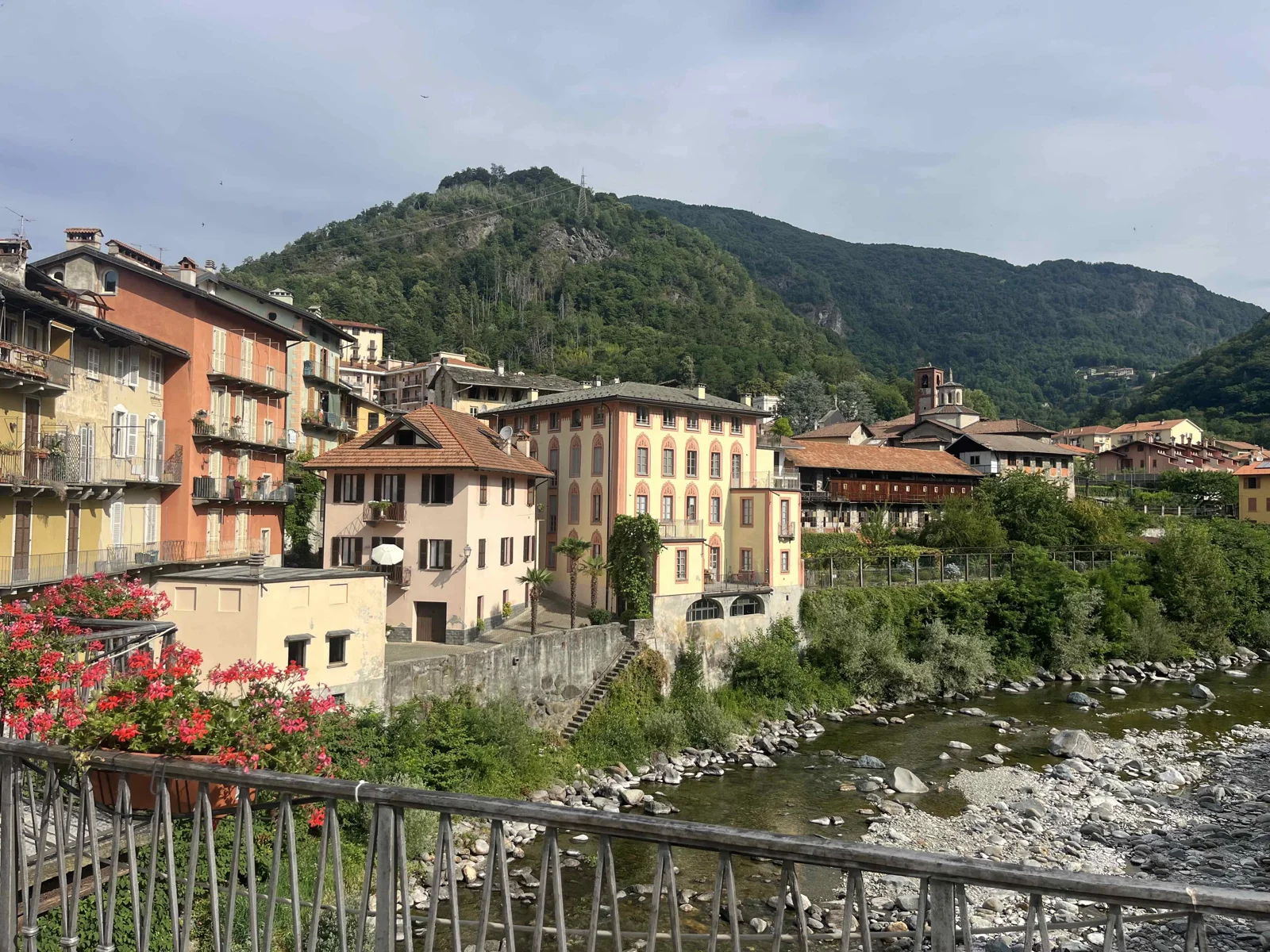
- Fly into Milan. Varallo is about 1 hour 45 minutes away.