
THE AUTONOMICS TRILOGY ⌖ BOOK ONE
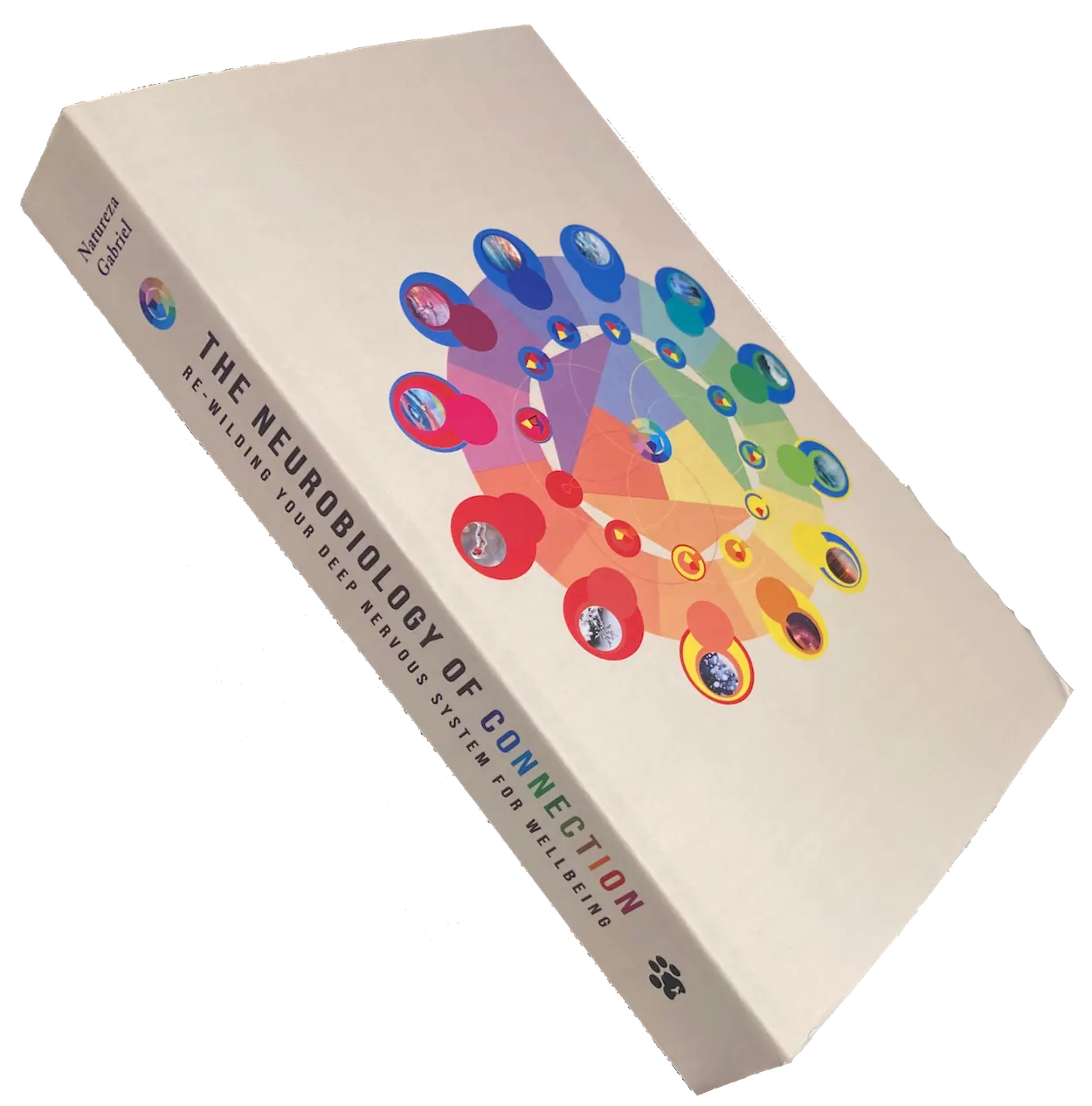
The Neurobiology of Connection
RE-WILDING YOUR DEEP NERVOUS SYSTEM FOR WELLBEING
Learn to grasp and move the deepest levers that govern your moment-to-moment experience of wellbeing.
FREE EXCERPT
Read the opening chapters before you buy.

YOUR EXCERPT IS READY
Thank you for joining the Hearth Science mailing list.
21 pages, 4.9 MB. The link works on this device for 7 days.
Your excerpt opens as soon as you submit the form, and you join the Hearth Science mailing list.
A HEALTH CREATION MANUAL
Grasp and move the deepest levers that govern wellbeing.
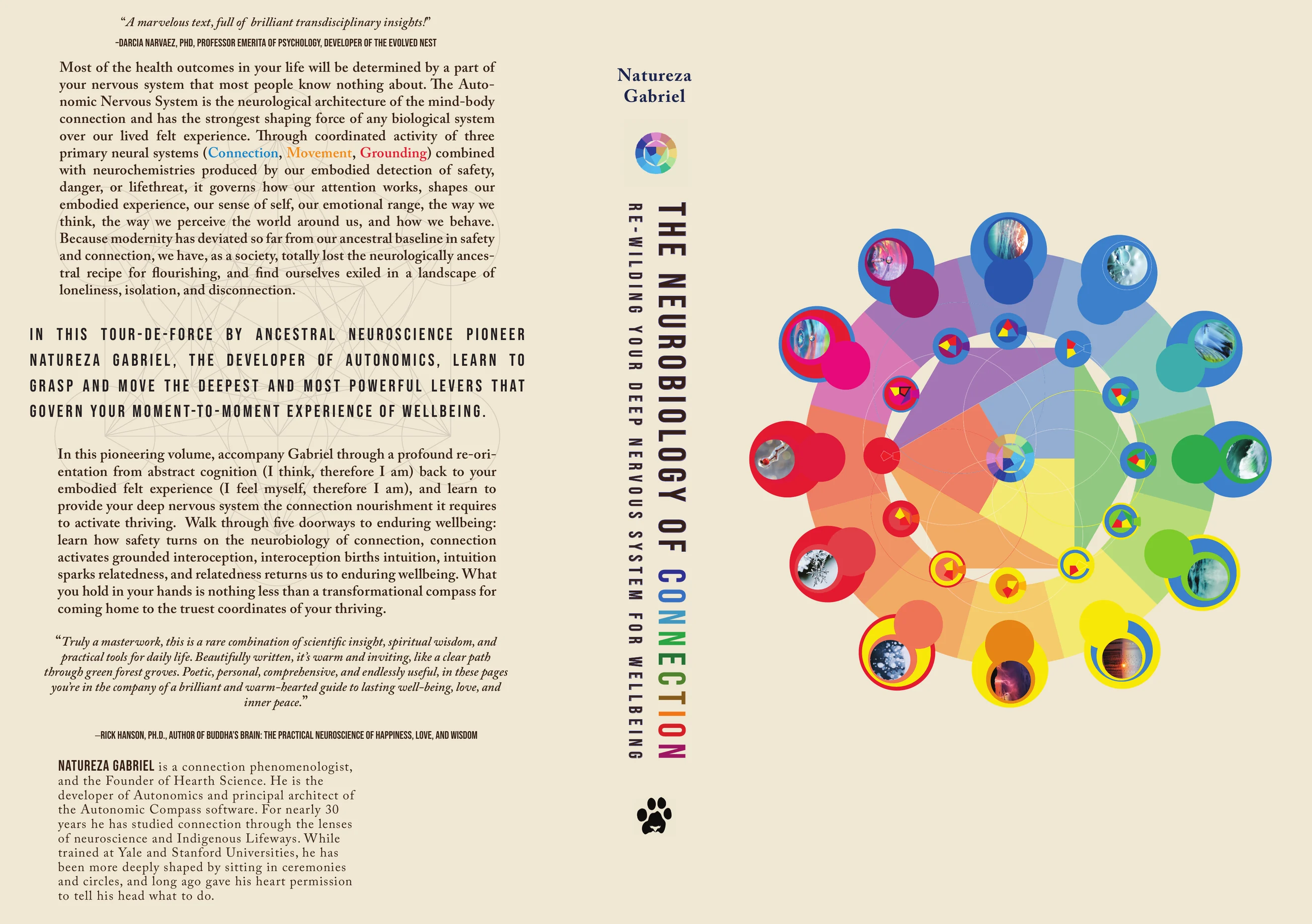
Most of the health outcomes in your life will be determined by a part of your nervous system that most people know nothing about. The Autonomic Nervous System is the neurological architecture of the mind-body connection and has the strongest shaping force of any biological system over our lived felt experience. Through coordinated activity of three primary neural systems (Connection, Movement, Grounding) combined with neurochemistries produced by our embodied detection of safety, danger, or lifethreat, it governs how our attention works, shapes our embodied experience, our sense of self, our emotional range, the way we think, the way we perceive of the world around us, and how we behave. Because modernity has deviated so far from our ancestral baseline in safety and connection, we have, as a society, totally lost the neurologically ancestral recipe for flourishing. The Neurobiology of Connection is a living cartography for this homecoming: a health-creation manual of the deepest, and highest order. Clear specific instructions for grasping and moving the deepest levers that govern your moment-to-moment experience of wellbeing.
“Truly a masterwork, this is a rare combination of scientific insight, spiritual wisdom, and practical tools for daily life. Beautifully written, it’s warm and inviting, like a clear path through green forest groves. Poetic, personal, comprehensive, and endlessly useful, in these pages you’re in the company of a brilliant and warm-hearted guide to lasting well-being, love, and inner peace.”
–Rick Hanson, PhD
Fellow, UC Berkeley Greater Good Science Center
Author of Buddha's Brain: The Practical Neuroscience of Happiness, Love, and Wisdom
“A marvelous text, full of brilliant trans-disciplinary insights.”
–Darcia Narvaez, PhD
Professor Emerita of Psychology, University of Notre Dame
Developer of the Evolved Nest
THE AUTONOMICS TRILOGY ⌖ A COMPREHENSIVE RESOURCE ON EACH AUTONOMIC SYSTEM
01
The Neurobiology of Connection
Learn to grasp and move the deepest and most powerful levers that govern your moment-to-moment experience of wellbeing.
YOU ARE HERE
02
GROUND
Understand how modernity itself is elaborated from a 12,000 year history of deviation from safety and connection; how this has uprooted us from the earth; how this uprooting is the source of chronic illness; and what we can and must do to transform it.
03
Body as Verb
There is no such thing as the sympathetic nervous system. Rather, there is the genius of the vertebrate movement system.
THE AUTHOR
Natureza Gabriel
is Founder of Hearth Science and Developer of Autonomics, built with more than 100 advisors across 25 disciplines of wellbeing and 24 cultures. The Neurobiology of Connection is the foundational text in our work – the book that introduces the model that our work is built around.
“Approximately 80% of adverse health outcomes in primary care are stress-related. We now have an extra-ordinarily refined cartography of their source.”
Read The Neurobiology of Connection
Available now, direct and through retail distribution.